WORKPLACE CULTURE AND WELLBEING
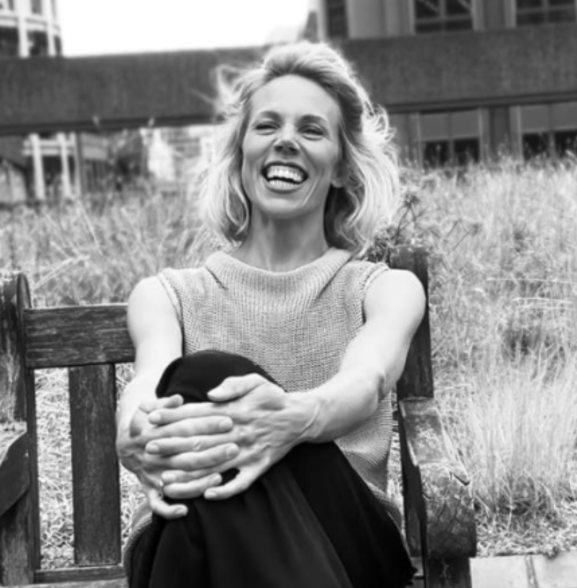
Isabel Soden - Founder of Reuben Feels and Play Lab
Isabel is a Founder of Reuben Feels and Play Lab and creative director and experience strategist who transforms workplace culture through science-backed, theatre-led interventions. With 15+ years designing experiences for brands including Google, Netflix and Diageo, she applies principles of flow and embodied learning to unlock innovation and resilience.
Q: How do you define ‘play’ in the context of a workplace? What distinguishes play from social activity, and why does that distinction matter for teams?
Play is a non-goal-oriented state of exploration- we exist in the present moment, in a state of flow where the brain floods with oxytocin and dopamine, downregulating the nervous system and countering the chronic cortisol spikes 83% of workers report. Social activities can be performative (think about networking anxiety, obligatory team lunches),but play is intrinsically motivated, immersive, and hierarchy free. This distinction matters because play builds genuine trust and cohesion, it makes us real and human- the conditions for authentic connection and innovation.
Q: Why is play important for hybrid teams? What do you see as the biggest communication barriers when working online being and how can a hybrid team benefit from one of your workshops?
The hybrid environment creates real communication barriers- we skip the biochemical temperature check, non-verbal clues are lost, work that should have multiple organic inputs happens in isolation, this creates silos, driving spikes in mental health issues and stress. Our workshops optimise rare in-person time: Plato said "You can discover more about a person in an hour of play than a year of conversation." Using play, nature's lifelong tool for bonding and learning, restores connection, reduces loneliness, and reignites relational dynamics for better collaboration.
Q: In your work with corporates, what patterns do you see in how teams engage with play-based experiences versus more traditional development or training interventions? What shifts in behaviour or dynamics tend to follow?
Play based experiences drive deeper engagement than traditional training because embodied, emotional learning sticks- information digested "through the body" is retained better. Teams experience higher energy, psychological safety, levelled hierarchies, and post-workshop emotional-to-behavioural shifts: surging creativity, trust, collaboration, and reported states of "energised, joyful, hopeful"- these all directly counter fatigue and burnout.
Q: What role does intentional creativity play in transforming organisational culture, beyond entertainment or engagement? How do you see teams as connected and what are the differences you see in them after an event with you?
View a team as an interconnected web of intelligent energy- isolated, parts underperform; in creative, generative states, synapses fire, lateral thinking emerges. Intentional creativity opens up novel thinking pathways. Primary outcomes are better innovation, creativity, collaboration. Longer term this culture breeds psychological safety- people are giving themselves permission to be curious, not sitting in stagnation because ‘getting it wrong’ is out of the question.
Q: Reuben Feels has produced work for major global brands like easyJet, Diageo, Google, Red Bull and Netflix, and you’ve been recognised among Time Out’s ‘100 Most Influential Creatives.’ How have your experiences creating large-scale immersive and live work informed your understanding of play in organisational contexts?
Thousands of rehearsal hours working with improvisation's universal rules: say yes to ideas, embrace failure, truly listen, play by the rules. Work, like theatre, is unscripted improvisation. These are universal values for creativity, collaboration, innovation- they apply to all humans in all structures. The discipline of always designing worlds and experiences in relation to what we want people to think, feel, do has created a very human-centric approach to learning, culture and strategy.
Q: Many leaders still view play as un–serious. Based on your experience, what would you say to a senior team about why play should be treated as a strategic driver of wellbeing, innovation and resilience?
Human performance is organisational performance. We need to link desired output to culture, culture to employee mindset, then play- the rest from stress, the bonding, the development of neural pathways. Flow state brains are 5x more effective. With technology we can now link what’s happening in the brain, with culture, with output and bottomline. Play is how we bond, it’s how we learn, it’s how we stay curious in the face of the unknown imperatives.
Q: Your work often brings people into shared experiences. How do you see teams interconnected systems, and what role does shared creative experience have in strengthening those connections?
Oh nice segue, touched on it above. Organisations are organic structures with permeable membranes for information and energy. A thriving culture has a flow of ideas, trust, collective purpose, meaning- those are the human motivators. Authentic, embodied experiences give individuals and teams a sense of belonging. This is strategy for leadership and behaviour at all levels.
Q: Teams today face hybrid working models and generational diversity. How can play help bridge those divides and cultivate a shared language or sense of belonging? Esp. when thinking about the way people are connected, but not connected in a hybrid world.
Play levels hierarchies, unlocking tacit knowledge and peer wisdom. People are seen as people: barriers dissolve, energy and ideas flow freely, creating the collective sense of belonging hybrid, dispersed teams urgently need.
Q: What are the conditions that make a creative/play experience impactful, and what common barriers do you see that undermine its potential?
In person, integrated experiences drive impact; wellbeing toolkits don't fix toxic cultures. Play must be company wide strategy, felt and embodied daily—not one off "holiday states." Embed micro moments of neural reset into rhythms and schedules; without integration, interventions remain surface level. Leadership must model the playful mindset for it to take root.
Q: Looking to the future, how do you see the role of play evolving in workplaces over the next decade — particularly as AI and automation reshape how we work?
AI is going to take process of our plates, leaving more time for our human qualities- this is where the value is. We need to get really good at the human stuff- connection, creativity, empathy- the rest will be outsourced. Play is the way that we can light up the human skill sets we need to stand above the rising tide of AI.
Q: For leaders who are sceptical about its value, what would you describe as the core return on investment of integrating play as part of organisational development?
More collaborative, integrated teams, more generative creative thought, positive change mentality, better emotional regulation. Look at chronic stress and burnout as a category in isolation- investment in this kind of cognitive resilience has a huge return.
Q: Finally, what advice would you give to organisations wanting to cultivate a culture where creativity and play are part of people’s everyday work?
It starts with psychological safety- do your teams feel safe to tinker, get lost, make mistakes?- this is the play state, this is the source of innovation and collaboration. If people are in a culture of ‘do it right, do it quickly’ then interventions will be surface level. A playful mentality begins at the top, it’s permission granting to be human, to be curious, to take risks.