BEYOND AI: THE HUMAN SKILLS LEADERS CAN'T IGNORE
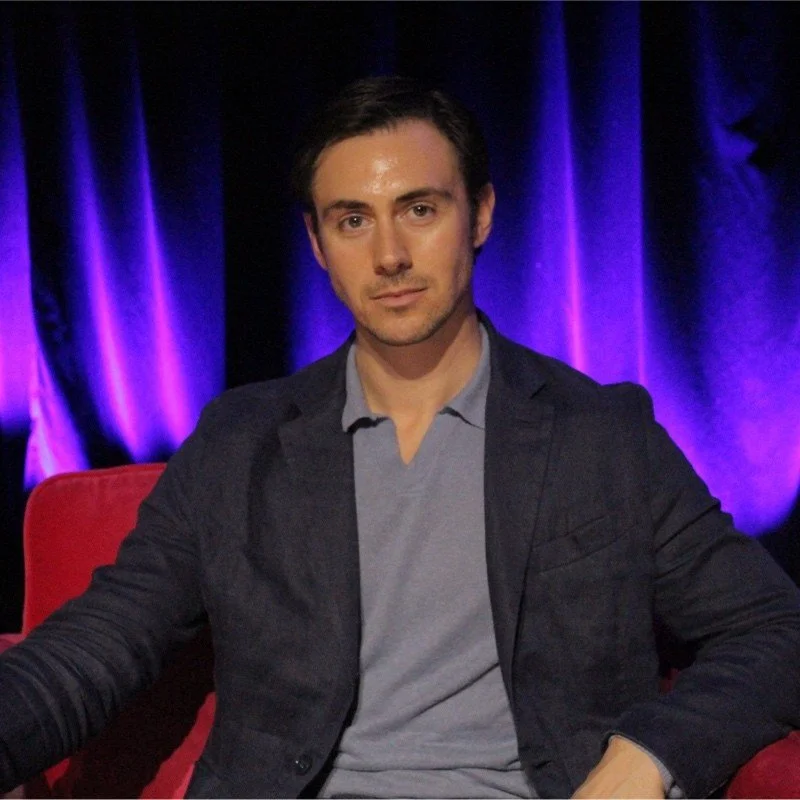
Peter Stojanovic - Editor of HotTopics
Peter is the editor of HotTopics and has spent several years interviewing FTSE 100 and Fortune 500 C-suite leaders about the shifting workplace. We sat down with him to learn about the impact of AI on business and society, empathy, communication and why imagination could become the most valuable skill in the next era of work and so much more.
Q: You’ve spoken with global business leaders about what’s coming next. What skills are consistently emerging as critical for a 2026-ready organisation?
The same ones that mattered in the 1990s and early 2000's. We're talking the real basics of human to human collaboration. That is what an organisation is at its core. It's a group of humans formally tied together to make something, a product, a service, a phenomenon and that requires human to human collaboration. We often position the future as demanding new technology. But to make any of that work we need collaboration, empathy, communication and the most overlooked skill of all: imagination. It's all about collaboration in a hybrid context. Empathy between teams, different hierarchies of teams and leaders to employees. Obviously communication falls into that too. We need clarity on how people work best, how they’re feeling and how that impacts their ability to show up. And we need space for creativity because when people collaborate well, something magical emerges.
Q: Leaders are talking more about AI. You've mentioned "agentic AI" as a major shift. What do you mean by that?
Agentic AI refers to proactive AI agents that act on a degree of volition. They operate more like colleagues: re-routing supply chains, handling customer volumes - with humans overseeing. They’re already here, and they suggest business models may change radically. AI is racing forward because someone imagined it first. Leaders are beginning to recognise that without imagination across their organisations, they won’t survive the pace of change ahead.
Q: Many people assume AI will give us more free time. Could it usher in a shorter 4 hour workday for example?
That's a good question. And the one that economists, politicians and business leaders are asking themselves. Some individuals report time savings. Better work flows, easier writing, improved efficiency. However, organisations are expecting full productivity in return for those savings. Any evidence we have at the moment for AI improving the work is anecdotal. There’s a more concerning trend: when people naturally leave a company, roles now sometimes go unfilled because the AI covers the workload. AI may not only replace jobs, but replace people. That leads to a much bigger civic question: what happens when more educated people have less work? Our current economic model doesn’t yet have an answer.
Q: Which brings us to capitalism. If productivity no longer equals human time, what happens to our value?
Exactly. We have built a system where society serves the economy, rather than the other way around. AI is forcing us to confront that contradiction. It’s a huge and under discussed question: what does an evolved version of capitalism look like when machines outperform humans? To answer that, we need imagination, and the courage to critique the system we currently benefit from.
Q: Turning to workplace culture: do leaders view employee engagement and wellbeing as a strategic priority yet?
They’re still seen as “nice to have.” When leaders talk about engagement, they’re usually measuring productivity. Happy teams produce more revenue, therefore engagement efforts are pursued as a business tactic, not a human priority. Executives absolutely understand wellbeing personally. They have families, lives, challenges. But corporate structures flatten those human realities into KPIs.
Q: You often link creativity to wellbeing. How mature are organisations in recognising creative or craft-based activities as cultural tools?
Most leaders value creativity when it produces something tangible. A product, a campaign, a new idea. But craft, play, making things with our hands? Those are usually reserved for away days or office parties. But play is one of the most neurologically powerful tools we have for learning, memory and social connection. It shifts perspective, gives the brain rest, builds trust. The problem is: you can’t quantify that. So organisations struggle to invest in it strategically.
Q: Hybrid work is normal now. Where do you see the biggest communication or trust gaps?
Hybrid work isn’t new. Global teams and creative industries have worked flexibly for decades. What is new is the scale and permanence post-pandemic. During that forced experiment, data from companies like Microsoft showed a drop in collaboration and innovation when everyone stayed remote. Now, leaders feel deep uncertainty about geopolitics, AI, economic instability. When people are scared, they cling to control. That’s what we’re seeing with return-to-office mandates. Employees feel it. Leaders struggle to articulate why in-person matters beyond productivity. Trust has to be rebuilt through consistent, relationship-based leadership, not HR spin.
Q: If you had to prioritise one trend for 2026 that leaders cannot ignore, what would it be?
Imagination. It brings together productivity, connection and hope. It enables us to redesign work, rethink space, rethink hierarchies, rethink the very purpose of companies. We need environments that encourage people to enjoy one another, because enjoyment fuels innovation.
Q: So how can companies spark imagination more intentionally?
By making space for play. Giving people permission to do something unrelated to output. Bringing in art, craft, different perspectives. You can’t measure every spark of inspiration, but you can create the conditions where sparks occur. The law of unintended consequences tells us great ideas often come from indirect paths. So let’s walk a few more of those paths.
Q: What are the biggest barriers keeping organisations from acting on wellbeing and human connection?
Fear and short-termism. When the economy shakes, CFOs go into protection mode. Wellbeing doesn’t show up in spreadsheet, so gets de-prioritised. The organisations that succeed will embed wellbeing and connection consistently. We're not talking about one-off workshops, but cultural rhythms. Start small, start local, let employees lead, and show that human value matters even when times are tough. When leaders invest in humans for the sake of human thriving, the business usually thrives too.
To learn more about Peter, check out his speakers profile here and visit the HotTopics website.